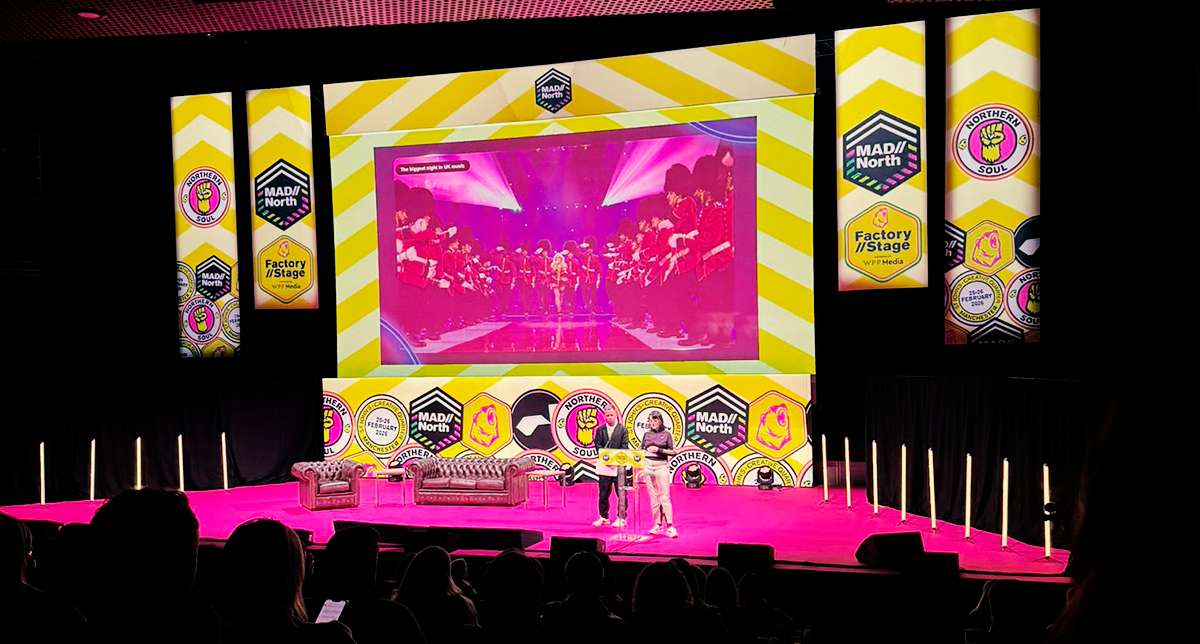
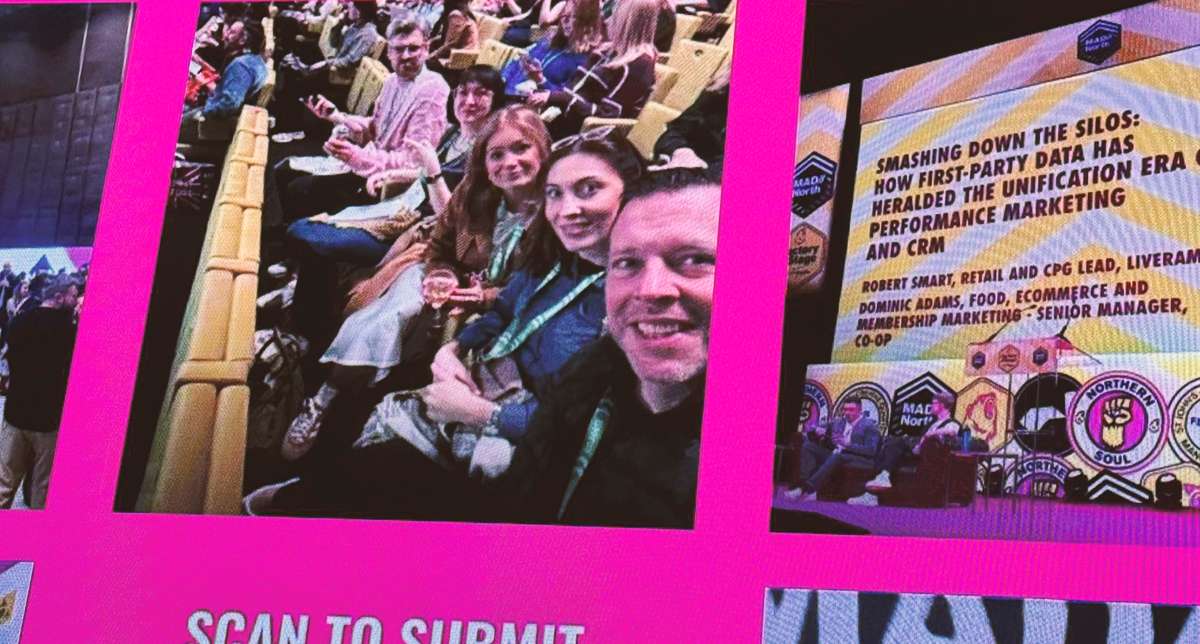
I like events like MAD//UpNorth for one reason more than anything else. You get a feel for the room.
You can watch trends online all year, you can read the think pieces, you can look at the data, but nothing quite replaces sitting in a space with other creatives and marketers and sensing what people are actually talking about, what they’re worried about, and what they’re excited by.
Last year felt anxious. The AI talks were packed. You had to queue to get in. I don’t think that was driven by fascination, I think it was worry. It felt like everyone was trying to work out whether the ground was shifting under their feet.
This year felt different.
The busiest sessions we went to weren’t AI-led. They were about creativity, culture, leaning into identity. The room felt calm. Not complacent, just steady. Like people had processed the shock and decided what really matters.
That shift was interesting.
It’s not that AI has reached its limits, because it clearly hasn’t. It’s getting better all the time. But maybe that’s part of it. When something becomes that good and that accessible, and everyone can generate something technically impressive, it very quickly becomes normal. And when it becomes normal, it becomes boring.
There’s also something harder to explain. Sometimes you see a piece of AI-generated content and even if it’s hyper-realistic, even if it’s “perfect”, you just know. And when you know, it’s like a fuse trips. Your interest powers down. There’s no friction, no story behind it, no sense of a human making a decision.
Across both days there was a clear undercurrent that people are craving something else. Not polish for the sake of polish, but personality. Imperfection. A point of view and a sense of belonging.
One of the standout talks for me was from Hooch celebrating their 30th anniversary. They leaned fully into the 90s. Not as a gimmick, but as a statement of who they are. They even used 90s design software. They talked about not overthinking, not apologising, trusting their instincts and their audience. It felt less like nostalgia and more like confidence.
That was the wider theme, lean into who you are and understand the culture you belong to. Don’t overstate your importance as a brand, but curate your place in culture properly while you have it.
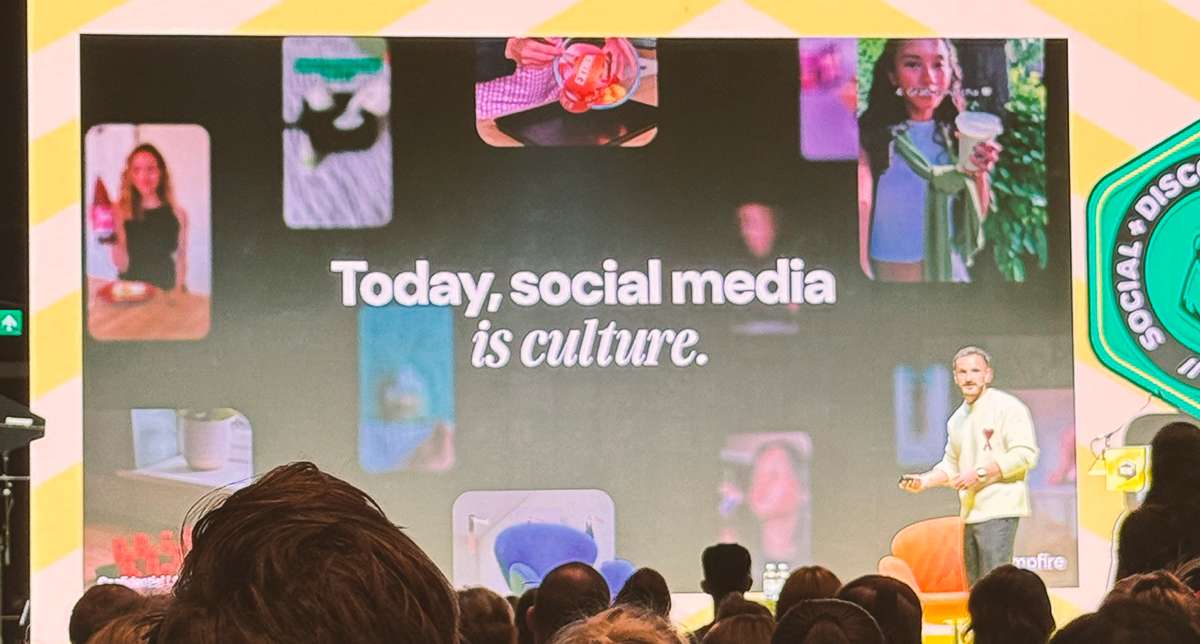
There was a lot of talk about bravery as well, but not in a reckless sense. Disruption only works if it solves something. Creativity has to be rooted in insight, you’re not tearing things up for attention, you’re doing it with purpose. That balance came through again and again.
What reassured me most wasn’t that “AI won’t win” or anything that dramatic. It was that humans clearly still need humans. We need art that carries someone’s experience. We need music with soul. We need brands that feel like they understand us, not just target us.
If you try to be good for everyone, you’re good for no one. That idea kept surfacing in different forms. The brands that stand out are the ones that commit. They risk a bit of discomfort. They accept that not everyone will like what they do.
The overall vibe wasn’t panic about the future. It was resilience. Almost a collective shrug followed by, fine, we’ll focus on what we do best.
And what we do best, as an industry, is create. With context. With culture. With emotion.
For me, that’s the most promising takeaway from the week. Not that technology is slowing down, but that creativity isn’t retreating in response to it. If anything, it feels more necessary than ever.
Tag Name

19/02/2026
An exploration of what it really means to be a challenger brand, beyond the label. This article looks ...
Tag Name

19/01/2026
Over the past few weeks, I’ve seen a growing conversation about the world going “back to analogue”. ...